

Nutritional Supplements and Cardiovascular Disease: What Every Patient should Know
Cardiovascular disease (CVD) and heart failure remain among the leading causes of illness and death worldwide. While medications, diet, and exercise are the cornerstones of management for these conditions, many patients and clinicians are interested in understanding and exploring the potential role of nutritional supplements in supporting disease prevention and/or management. With a growing number of individuals indicating current use of nutritional supplements daily in hopes of supporting heart health, it leads one to question is this truly evidence-based practice, or are we all being sold on these supplements by marketing companies? Today we dive into the research and explore certain nutritional supplements touted to support heart health, and what the current guidelines and recommendations suggest.
Evidence-Based Dietary Patterns
While nutritional supplements are touted to provide significant health benefits and improve multiple ailments, the underlying truth is that nutritional supplements are not a cure. They can be assistive in disease management or prevention when combined with both lifestyle behaviors/changes and medical treatment. In no way can a nutritional supplement offset need for medication management or lifestyle changes in improving disease symptoms or preventing disease onset or progression.
Looking at most major professional organization guidelines updated within the past 10 years, recommendations continue to encourage focusing on healthy dietary patterns—such as the Mediterranean, DASH, and plant-focused dietary patterns—rather than relying on supplements for CVD or heart failure (HF) prevention or management. Each of these dietary patterns have been strongly associated in the scientific literature to support heart health and reduce CVD risk. Based on current nutritional guideline recommendations, routine use of dietary supplements is not recommended for the general population [1,2].
Supplements: What Works and What Doesn’t
While there are thousands of nutritional supplements available to the public, more coming to market by the day, we reviewed ones that have a greater level of scientific investigation for benefit on heart health.
Multivitamins, Vitamin D, Calcium, and Antioxidants: Large meta-analyses and systematic reviews consistently show no benefit for CVD prevention or mortality with supplementation of a daily multivitamin, Vitamin D, calcium, and common antioxidants like Vitamin E and Beta-carotene. Antioxidants may even significantly increase the risk of cardiovascular harm through supplementation. Supratherapeutic supplementation of Vitamin E increases the risk of bleeding events, such as hemorrhagic stroke, due to its impact on anti-platelet/anti-coagulant effects. “Antioxidant cocktails”, or the combination of multiple antioxidants at supratherapeutic dosages, may disrupt endogenous oxidative signaling which is important for vascular adaptation [1,3-5].
Folic Acid and B Vitamins (B6, B12, Folate): While there are multiple studies investigating several B Vitamins and Folic Acid on their impacts on heart health, none have shown a clinically significant benefit on CVD outcomes. There is mixed evidence that folic acid and certain B vitamins may reduce stroke risk through reduction in homocysteine levels in the blood which is linked to arterial damage and clot formation. Further research is required to understand these findings [3].
Omega-3 Fatty Acids (Fish Oil): Current scientific evidence remains largely mixed on the cardiovascular benefits of omega-3 supplementation, despite ongoing recommendation from some professional medical organizations. Few studies show modest benefits for heart failure patients, especially with high-dose, long-term supplementation (2000–4000 mg/day for at least one year), improving cardiac function without increasing adverse events. However, observed benefits for primary CVD prevention are limited, and routine use is not universally recommended across professional organizations’ guidelines [1, 6-9].
Coenzyme Q10 (CoQ10): Research remains largely mixed on CoQ10 supplementation with confusion on heart benefits. Some studies have observed that short-term supplementation may mildly improve ejection fraction and blood pressure in individuals with heart failure. However, long-term cardiovascular benefits remain unproven based on multiple long-term studies. Due to this glaring gap in scientific knowledge, routine use of CoQ10 is not recommended [2,10,11].
Iron: Iron is essential for hemoglobin to support oxygen transportation to tissues as well as working as a cofactor in mitochondrial enzymes supporting energy production. However, supplementation of iron without the identified presence of deficiency is dangerous and is not recommended as it may lead to excess iron deposits in heart tissue increasing the risk of arrhythmias, cardiomyopathy, and worsening heart failure. For heart failure patients with identified iron deficiency, intravenous iron supplementation is recommended to improve quality of life and reduce hospitalizations as oral iron is often poorly absorbed due to inflammation and gut changes in heart failure [12,13].
Other Nutraceuticals (e.g., Hawthorn, L-Carnitine, D-Ribose, Probiotics, Beet Nitrates): Multiple nutraceutical supplements have noted some cardiovascular benefits to a varying degree. While some may potentially improve symptoms or quality of life in early-stage HF, high-quality, robust evidence is severely limited and, therefore, clinical-grade recommendations cannot be made on these supplements. Consideration as adjustive support is not without risk and should be discussed thoroughly with your doctor before starting as drug-nutrient interactions may occur when paired with medical management [10,11].
Summary Table: Supplements and Cardiovascular Outcomes
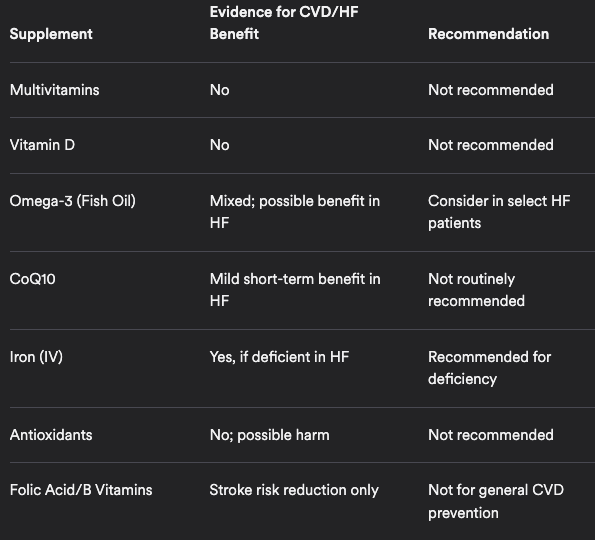
Figure 1: Summary of Supplement Recommendations for CVD and Heart Failure [1-10,12,16-18].
Key Takeaways
Supplements are not a substitute for a healthy dietary or evidence-based medical therapy.
Routine use of most nutritional supplements for CVD or HF prevention or management is not supported by strong evidence at this time.
Specific supplements (e.g., iron for deficiency, high-dose omega-3s in select HF patients) may be beneficial under medical supervision.
Always consult a healthcare provider before starting any supplement, especially if you have heart disease or are on prescribed medications.
Conclusion
The best approach for heart health remains a balanced dietary pattern, regular exercise, and adherence to prescribed medications per evidenced-based medical guidance. Supplements should only be used when there is a clear, evidence-based indication and under close medical guidance and observation. Use of nutritional supplements at supratherapeutic doses may inadvertently increase the risk of worsening heart disease or heart failure symptoms and events, and is therefore not recommended. Discuss with your doctor, pharmacist, or a qualified Registered Dietitian Nutritionist on which nutritional supplements may be beneficial for you and your heart health based on your unique medical picture.
At Wholehearted Nutrition and Wellness PLLC, we believe that good nutrition and wellness is more than just fancy marketing terms or unattainable goals for another day. Creating approachable, progressive, achievable, and sustainable nutrition and wellness plans is how we make these health goals and milestone a reality today. We recognize why nutrition and exercise deserves center stage in cardiovascular disease management and prevention. If you’re interested in beginning your nutrition and wellness journey to improve your heart health, or are just seeking guidance on how to manage your heart disease through nutrition, book an appointment with us today and begin your health journey. We strive to support you every step of the way.
References
1. Khan, S., Khan, M., Riaz, H., Valavoor, S., Zhao, D., Vaughan, L., Okunrintemi, V., Riaz, I., Khan, M., Kaluski, E., Murad, M., Blaha, M., Guallar, E., & Michos, E. Effects of Nutritional Supplements and Dietary Interventions on Cardiovascular Outcomes. Annals of Internal Medicine. 2019; 171. https://doi.org/10.7326/m19-0341.
2. Cicero, A., Colletti, A., Von Haehling, S., Vinereanu, D., Bielecka-Dabrowa, A., Sahebkar, A., Toth, P., Reiner, Ž., Wong, N., Mikhailidis, D., Ferri, C., & Banach, M. Nutraceutical support in heart failure: a position paper of the International Lipid Expert Panel (ILEP). Nutrition Research Reviews. 2020; 33. https://doi.org/10.1017/s0954422420000049.
3. Eilat-Adar, S., Sinai, T., Yosefy, C., & Henkin, Y. Nutritional Recommendations for Cardiovascular Disease Prevention. Nutrients. 2013; 5. https://doi.org/10.3390/nu5093646.
4. Kido, K., Beavers, C., Dulnuan, K., Fida, N., Guglin, M., Ilonze, O., Mentz, R., Narang, N., Rajagopalan, N., Ramu, B., Sattar, Y., Sokos, G., & Jankowska, E. Management of Iron Deficiency in Heart Failure: Practical Considerations and Implementation of Evidence-Based Iron Supplementation. JACC: Heart failure. 2024; 12. https://doi.org/10.1016/j.jchf.2024.05.014.
5. Jenkins, D., Spence, J., Giovannucci, E., Kim, Y., Josse, R., Vieth, R., Sahye-Pudaruth, S., Paquette, M., Patel, D., Mejia, B., Viguiliouk, E., Nishi, S., Kavanagh, M., Tsirakis, T., Kendall, C., Pichika, S., & Sievenpiper, J. Supplemental Vitamins and Minerals for Cardiovascular Disease Prevention and Treatment: JACC Focus Seminar. Journal of the American College of Cardiology. 2021; 77 4. https://doi.org/10.1016/j.jacc.2020.09.619.
6. Tseng, P., Zeng, B., Hsu, C., Liang, C., Stubbs, B., Chen, Y., Chen, T., Lei, W., Chen, J., Shiue, Y., & Su, K. The Optimal Dosage and Duration of ω-3 PUFA Supplementation in Heart Failure Management: Evidence from a Network Meta-Analysis. Advances in Nutrition. 2025; 16. https://doi.org/10.1016/j.advnut.2025.100366.
7. Siscovick, D., Barringer, T., Fretts, A., Wu, J., Lichtenstein, A., Costello, R., Kris-Etherton, P., Jacobson, T., Engler, M., Alger, H., Appel, L., & Mozaffarian, D. Omega-3 Polyunsaturated Fatty Acid (Fish Oil) Supplementation and the Prevention of Clinical Cardiovascular Disease: A Science Advisory From the American Heart Association. Circulation. 2017; 135. https://doi.org/10.1161/cir.0000000000000482.
8. Macrì, R., Mollace, R., Serra, M., Scarano, F., Ritorto, G., Ussia, S., Cardamone, A., Coppoletta, A., Carresi, C., Gliozzi, M., Musolino, V., Maiuolo, J., Palma, E., Volterrani, M., Mollace, V., & Muscoli, C. Nutritional and Nutraceutical Support to the Failing Myocardium: A Possible Way of Potentiating the Current Treatment of Heart Failure. International Journal of Molecular Sciences. 2024; 25. https://doi.org/10.3390/ijms252212232.
9. Mollace, V., Rosano, G., Anker, S., Coats, A., Seferovic, P., Mollace, R., Tavernese, A., Gliozzi, M., Musolino, V., Carresi, C., Maiuolo, J., Macrì, R., Bosco, F., Chiocchi, M., Romeo, F., Metra, M., & Volterrani, M. Pathophysiological Basis for Nutraceutical Supplementation in Heart Failure: A Comprehensive Review. Nutrients. 2020; 13. https://doi.org/10.3390/nu13010257.
10. Manson, J., Bassuk, S., Cook, N., Lee, I., Mora, S., Albert, C., & Buring, J. Vitamin D, Marine n-3 Fatty Acids, and Primary Prevention of Cardiovascular Disease Current Evidence. Circulation Research. 2020; 126. https://doi.org/10.1161/circresaha.119.314541.
11. Khan, M., Khan, F., Fonarow, G., Sreenivasan, J., Greene, S., Khan, S., Usman, M., Vaduganathan, M., Fudim, M., Anker, S., & Butler, J. Dietary interventions and nutritional supplements for heart failure: a systematic appraisal and evidence map. European Journal of Heart Failure. 2021; 23. https://doi.org/10.1002/ejhf.2278.
12. Mangione, C., Barry, M., Nicholson, W., Cabana, M., Chelmow, D., Coker, T., Davis, E., Donahue, K., Doubeni, C., Jaén, C., Kubik, M., Li, L., Ogedegbe, G., Pbert, L., Ruiz, J., Stevermer, J., & Wong, J. Vitamin, Mineral, and Multivitamin Supplementation to Prevent Cardiovascular Disease and Cancer: US Preventive Services Task Force Recommendation Statement. JAMA. 2022; 327 23. https://doi.org/10.1001/jama.2022.8970.
13. Kampka, Z., Czapla, D., Wojakowski, W., & Stanek, A. Vitamin D Supplementation in Heart Failure—Confusion Without a Cause?. Nutrients. 2025; 17. https://doi.org/10.3390/nu17111839.
14. Moyer, V. Vitamin, mineral, and multivitamin supplements for the primary prevention of cardiovascular disease and cancer: U.S. Preventive services Task Force recommendation statement. Annals of internal medicine. 2014; 160 8. https://doi.org/10.7326/m14-0198.
15. Habaybeh, D., De Moraes, M., Slee, A., & Avgerinou, C. Nutritional interventions for heart failure patients who are malnourished or at risk of malnutrition or cachexia: a systematic review and meta-analysis. Heart Failure Reviews. 2020; 26. https://doi.org/10.1007/s10741-020-09937-9.
16. Kiely, M., Brennan, L., Dunlop, T., Tate, G., Woodside, J., & Moretti, D. Prevention of chronic disease using vitamins—a case study of the vitamin D and cardiovascular disease hypothesis using evidence from randomised controlled and prospective cohort studies. European Journal of Nutrition. 2025; 64. https://doi.org/10.1007/s00394-025-03706-w.
17. Fernández-Pombo, A., Rodríguez-Carnero, G., Castro, A., Cantón-Blanco, A., Seoane, L., Casanueva, F., Crujeiras, A., & Martínez-Olmos, M. Relevance of nutritional assessment and treatment to counteract cardiac cachexia and sarcopenia in chronic heart failure. Clinical Nutrition. 2021; 40 9. https://doi.org/10.1016/j.clnu.2021.07.027.
18. Myung, S., Ju, W., Cho, B., Oh, S., Park, S., Koo, B., & Park, B. Efficacy of vitamin and antioxidant supplements in prevention of cardiovascular disease: systematic review and meta-analysis of randomised controlled trials. The BMJ. 2013; 346. https://doi.org/10.1136/bmj.f10.
19. Sciatti, E., Lombardi, C., Ravera, A., Vizzardi, E., Bonadei, I., Carubelli, V., Gorga, E., & Metra, M. Nutritional Deficiency in Patients with Heart Failure. Nutrients. 2016; 8. https://doi.org/10.3390/nu8070442.
20. Rychter, A., Hryhorowicz, S., Słomski, R., Dobrowolska, A., & Krela-Kaźmierczak, I. Antioxidant effects of vitamin E and risk of cardiovascular disease in women with obesity - A narrative review. Clinical Nutrition. 2022; 41 7. https://doi.org/10.1016/j.clnu.2022.04.032.