

Are High-Protein Dietary Patterns Good For Heart Disease Management and Cardiovascular Health?

High-protein coffee, high-protein cereals, high-protein cookies! It’s hard to walk through the grocery isles these days without seeing every food having a new, higher protein variety. These food marketing strategies reflect the greater social trend of higher protein intake to support health, weight management, and muscle mass. But with the rise of focus on adequate protein intake daily, it leads one to question whether these higher protein recommendations are safe for those with heart disease, or heart health markers such as elevated cholesterol and high blood pressure?
A high-protein diet is often promoted for weight loss, muscle gain, and strong hair/skin/nails, but its impact on heart health and cardiac disease risk is complex and depends on the type and amount of protein, as well as the overall dietary pattern. Today we review the scientific literature on the impacts of a high-protein dietary pattern on heart health and provide some recommendations to support heart health if considering if a higher protein intake is right for you.
How High-Protein Diets Affect Heart Health
Recent research shows that high-protein dietary patterns (between 1.2-2.0 grams per kilogram body weight per day)—especially those rich in high-quality proteins like soy, white meat, and whey—can modestly lower blood pressure, cholesterol, and triglycerides, particularly in people who are overweight or have high blood pressure. Whey protein, in particular, has shown particularly higher associated benefit in improving these cardiovascular risk factors in these populations. For those who are allergic to whey protein or avoid animal proteins, plant-based, high-protein diets are associated with generally better lipid profiles and lower cardiovascular risk than animal-based ones [1-5].
However, not all recent scientific studies agree with higher protein intakes improving heart health. Large meta-analyses of long-term cohort studies have found no significant association between high total protein intake and reduced risk of heart attack, stroke, or cardiovascular death in the general population. Some research even suggests that very high protein intake (>2.0 grams per kilogram body weight per day)—especially from animal sources or when combined with low carbohydrate intake—may increase the risk of cardiovascular disease, potentially due to sophisticated mechanisms involving systemic inflammation and arterial plaque formation [6-12].
The Importance of Protein Source
While much of the social conversation has been focused on the quantity of protein consumed, the source of protein matters just as much, if not more. It is no hidden secret that dietary patterns high in red and processed/cured meats are linked to higher heart disease risk. Red meats are often much higher in saturated fats per serving than leaner white meats, while their impact on whole-body inflammation are still being elucidated in the research. Cured and processed meats utilize sodium chloride salt or nitrate/nitrite salts to reduce bacterial/pathogen growth but can lead to increased sodium consumption and increased GI cancer risk. However, dietary patterns emphasizing plant proteins across the week (nuts, seeds, legumes) or lean animal proteins (fish, poultry, low-fat dairy) are associated with an overall lower risk of heart disease development or progression. Replacing just a few servings of animal protein with equivalent or greater plant proteins can significantly support heart health and improve cardiovascular disease markers such as blood pressure, cholesterol profile, and disease event frequency [3-5, 13-15].
Table: Effects of High-Protein Diets on Heart Health
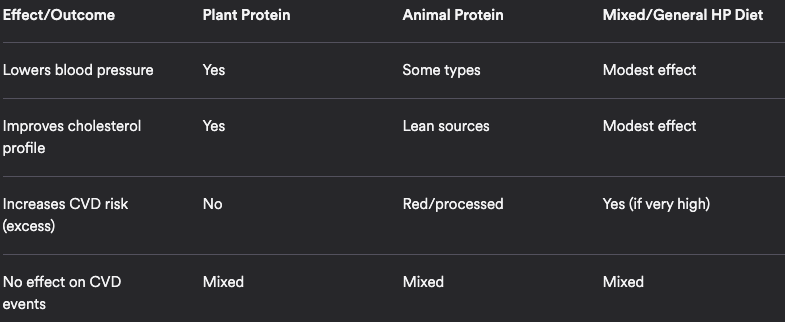
Table 1: Comparison of protein sources and their effects on heart health [1-12, 16,17].
Conclusion
While high-protein diets can improve some heart health markers, evidence remains mixed on its overall health benefits, and risks may rise with excess animal protein and/or low-carbohydrate dietary patterns. For supporting your heart health, focus on moderate, high-quality protein intake—preferably from plant sources—within a balanced diet. Avoid excessive animal protein intakes to meet protein needs, especially red and processed meats as these can increased saturated fat and sodium consumption which may lead to worsening blood pressure and cholesterol levels. For the hardcore protein fans out there, be cautious with very high-protein (>2,0 gram per kilogram body weight), low-carbohydrate (<130 grams per day) dietary patterns if struggling heart disease, renal disease, or high intensity exercise training. For optimal cardiovascular protection and support, consider a balanced dietary pattern across the day focusing on sufficient protein, fat, carbohydrates, and fiber while reducing dietary intake of saturated and trans fats, added sugars, and excess sodium. To understand your estimated nutritional needs and daily nutrient goals, consider working with a licensed and Registered Dietitian who will give you a straight-forward idea based on your personal health and activity background.
At Wholehearted Nutrition and Wellness PLLC, we strongly believe that food is more than just fuel. It’s medicine, connection, enjoyment, and empowerment. We recognize that nutrition deserves center stage in cardiovascular disease management. If you’re interested in following a heart healthy dietary pattern or learning how to manage your heart disease through nutrition, book an appointment with us today and begin your journey to better heart health. Our Registered Dietitians are here to support you in achieving better heart health through nutrition and wellness.
Practical Takeaways
Moderate increases in high-quality, lean protein, especially from plant sources, towards or slightly above estimated daily allowance of 0.8-1.0 gram per kilogram body weight may benefit overall heart health.
Excessive protein intake, particularly from red meat, may increase cardiovascular risk due to increased intake of saturated fats increasing inflammation and arterial plaque formation.
The overall dietary pattern—including protein, fat and carbohydrate quality—plays a crucial role in heart health outcomes [2-4,9,11].
References
1. Zhou, S., Cheng, F., He, J., Xu, T., Zhang, X., Wan, S., Qi, J., He, J., Chen, F., Luo, J., Luo, Y., & An, P. Effects of high-quality protein supplementation on cardiovascular risk factors in individuals with metabolic diseases: A systematic review and meta-analysis of randomized controlled trials. Clinical Nutrition. 2024; 43 8. https://doi.org/10.1016/j.clnu.2024.06.013.
2. Yao, Y., Huang, V., Seah, V., & Kim, J. Impact of Quantity and Type of Dietary Protein on Cardiovascular Disease Risk Factors Using Standard and Network Meta-analyses of Randomized Controlled Trials. Nutrition Reviews. 2024; 83. https://doi.org/10.1093/nutrit/nuae086.
3. Zhubi-Bakija, F., Bajraktari, G., Bytyçi, I., Mikhailidis, D., Henein, M., Latkovskis, G., Rexhaj, Z., Zhubi, E., Banach, M., Alnouri, F., Amar, F., Atanasov, A., Bartłomiejczyk, M., Bjelakovic, B., Bruckert, E., Cafferata, A., Češka, R., Cicero, A., Collet, X., Descamps, O., Djuric, D., Durst, R., Ezhov, M., Fras, Z., Gaita, D., Hernández, A., Jones, S., Jozwiak, J., Kakauridze, N., Katsiki, N., Khera, A., Kostner, K., Kubilius, R., Mancini, G., Marais, A., Martin, S., Martinez, J., Mazidi, M., Mirrakhimov, E., Miserez, A., Mitchenko, O., Moriarty, P., Nabavi, S., Nair, D., Panagiotakos, D., Paragh, G., Pella, D., Penson, P., Petrulionienė, Ž., Pirro, M., Postadzhiyan, A., Puri, R., Reda, A., Reiner, Ž., Riadh, J., Richter, D., Rizzo, M., Ruscica, M., Sahebkar, A., Sattar, N., Serban, M., Shehab, A., Shek, A., Sirtori, C., Stefanutti, C., Tomasik, T., Toth, P., Viigimaa, M., Vinereanu, D., Vohnout, B., Haehling, S., Vrablík, M., Wong, N., Yeh, H., Zhi-Sheng, J., & Zirlik, A. The impact of type of dietary protein, animal versus vegetable, in modifying cardiometabolic risk factors: A position paper from the International Lipid Expert Panel (ILEP).. Clinical Nutrition. 2020 https://doi.org/10.1016/j.clnu.2020.05.017.
4. , Y., Zheng, Z., Zhuang, L., Wang, H., Li, A., Chen, L., & Liu, L. Dietary Macronutrient Intake and Cardiovascular Disease Risk and Mortality: A Systematic Review and Dose-Response Meta-Analysis of Prospective Cohort Studies. Nutrients. 2024; 16. https://doi.org/10.3390/nu16010152.
5. Qian, S., Fu, M., Han, L., Sun, W., & Sun, H. Dietary protein sources, genetics, and cardiovascular disease incidence.. Journal of Affective Disorders. 2024 https://doi.org/10.1016/j.jad.2024.01.233.
6. Mantzouranis, E., Kakargia, E., Kakargias, F., Lazaros, G., & Tsioufis, K. The Impact of High Protein Diets on Cardiovascular Outcomes: A Systematic Review and Meta-Analysis of Prospective Cohort Studies. Nutrients. 2023; 15. https://doi.org/10.3390/nu15061372.
7. Mousavi, S., Jayedi, A., Jalilpiran, Y., Hajishafiee, M., Aminianfar, A., & Esmaillzadeh, A. Dietary intake of total, animal and plant proteins and the risk of coronary heart disease and hypertension: a systematic review and dose-response meta-analysis of prospective cohort studies. Critical Reviews in Food Science and Nutrition. 2020; 62. https://doi.org/10.1080/10408398.2020.1841730.
8. Zhang, X., Sergin, I., Evans, T., Jeong, S., Rodriguez-Velez, A., Kapoor, D., Chen, S., Song, E., Holloway, K., Crowley, J., Epelman, S., Weihl, C., Diwan, A., Fan, D., Mittendorfer, B., Stitziel, N., Schilling, J., Lodhi, I., & Razani, B. High-protein diets increase cardiovascular risk by activating macrophage mTOR to suppress mitophagy. Nature Metabolism. 2020; 2. https://doi.org/10.1038/s42255-019-0162-4.
9. Fappi, A., & Mittendorfer, B. Dietary protein intake and obesity-associated cardiometabolic function. Current Opinion in Clinical Nutrition and Metabolic Care. 2020; 23. https://doi.org/10.1097/mco.0000000000000689.
10. Zhang, X., Kapoor, D., Jeong, S., Fappi, A., Stitham, J., Shabrish, V., Sergin, I., Yousif, E., Rodriguez-Velez, A., Yeh, Y., Park, A., Yurdagul, A., Rom, O., Epelman, S., Schilling, J., Sardiello, M., Diwan, A., Cho, J., Stitziel, N., Javaheri, A., Lodhi, I., Mittendorfer, B., & Razani, B. Identification of a leucine-mediated threshold effect governing macrophage mTOR signalling and cardiovascular risk. Nature Metabolism. 2024; 6. https://doi.org/10.1038/s42255-024-00984-2.
11. Lagiou, P., Sandin, S., Lof, M., Trichopoulos, D., Adami, H., & Weiderpass, E. Low carbohydrate-high protein diet and incidence of cardiovascular diseases in Swedish women: prospective cohort study. The BMJ. 2012; 344. https://doi.org/10.1136/bmj.e4026.
12. Hernández‐Alonso, P., Salas‐Salvadó, J., Ruíz-Canela, M., Corella, D., Estruch, R., Fitó, M., Arós, F., Gómez-Gracia, E., Fiol, M., Lapetra, J., Basora, J., Serra-Majem, L., Muñoz, M., Buil-Cosiales, P., Saiz, C., & Bulló, M. High dietary protein intake is associated with an increased body weight and total death risk. Clinical Nutrition. 2016; 35 2. https://doi.org/10.1016/j.clnu.2015.03.016.
13. Tharrey, M., Mariotti, F., Mashchak, A., Barbillon, P., Delattre, M., & Fraser, G. Patterns of plant and animal protein intake are strongly associated with cardiovascular mortality: the Adventist Health Study-2 cohort. International Journal of Epidemiology. 2018; 47 5. https://doi.org/10.1093/ije/dyy030.
14. Hu, F. Protein, body weight, and cardiovascular health. The American Journal of Clinical Nutrition. 2005; 82 1 Suppl. https://doi.org/10.1093/ajcn/82.1.242s.
15. Richter, C., Skulas-Ray, A., Champagne, C., & Kris-Etherton, P. Plant protein and animal proteins: do they differentially affect cardiovascular disease risk?. Advances in Nutrition. 2015; 6 6. https://doi.org/10.3945/an.115.009654.
16. Appel, L. The effects of protein intake on blood pressure and cardiovascular disease. Current Opinion in Lipidology. 2003; 14. https://doi.org/10.1097/00041433-200302000-00010.
17. Tischmann, L., Drummen, M., Joris, P., Gatta-Cherifi, B., Raben, A., Fogelholm, M., Matias, I., Cota, D., Mensink, R., Westerterp-Plantenga, M., & Adam, T. Effects of a High-Protein Diet on Cardiometabolic Health, Vascular Function, and Endocannabinoids—A PREVIEW Study. Nutrients. 2020; 12. https://doi.org/10.3390/nu12051512.
18. Richter, C., Skulas-Ray, A., Champagne, C., & Kris-Etherton, P. Plant protein and animal proteins: do they differentially affect cardiovascular disease risk?. Advances in Nutrition. 2015; 6 6. https://doi.org/10.3945/an.115.009654.
19. Zhang, X., Kapoor, D., Jeong, S., Stitham, J., Fappi, A., Yousif, E., Rodriguez-Velez, A., Yeh, Y., Park, A., Mittendorfer, B., & Razani, B. Abstract P147: Dietary Protein Elicits A Leucine-mediated Threshold Effect On Monocyte/macrophage Mtorc1-autophagy Signaling Resulting In Elevated Cardiovascular Risk. Arteriosclerosis, Thrombosis, and Vascular Biology. 2021 https://doi.org/10.1161/atvb.41.suppl_1.p147.
20. Tischmann, L., Drummen, M., Joris, P., Gatta-Cherifi, B., Raben, A., Fogelholm, M., Matias, I., Cota, D., Mensink, R., Westerterp-Plantenga, M., & Adam, T. Effects of a High-Protein Diet on Cardiometabolic Health, Vascular Function, and Endocannabinoids—A PREVIEW Study. Nutrients. 2020; 12. https://doi.org/10.3390/nu12051512.