

Is Your Fat Intake Impacting Your Blood Sugar Levels?
A Review of Fat’s Impact on Blood Sugar, Digestion, and Insulin Sensitivity in Type 2 Diabetes and Heart Disease

Individuals managing their blood sugar levels with type 2 diabetes mellitus (T2DM) or prediabetes may already be paying attention to their dietary carbohydrate and sugar intake, but is that enough? Providers educate and focus on the blood sugar impacts of dietary carbohydrate intake, but few look at the impact dietary fats can have on insulin sensitivity leading to confusion and frustration when hemoglobin A1c numbers are resistant to improve despite ongoing interventions. Understanding how dietary fat affects blood sugar management, digestion, and insulin sensitivity is crucial for individuals with T2DM and heart disease (HD). Today we dive into how the type and amount of fat consumed can influence metabolic health, while navigating how this relationship is complex and nuanced.
The Role of Dietary Fat in Diabetes Development
While all macronutrients impact blood sugar levels and metabolism differently, their impact on insulin resistance and disease development are not equivalent. Current research points out that total dietary fat intake alone does not appear to be directly associated with the risk of developing T2DM or with worsening blood sugar control; rather, the quality, quantity, and source of dietary fat are more important. Diets higher in unsaturated fatty acids, primarily found in plant-based sources, especially polyunsaturated fatty acids (PUFAs), are linked to better glycemic control and a lower risk of diabetes development or progression.
At the same time, research notes higher intakes of saturated and trans fats may have adverse effects on insulin resistance and disease development. Excessive intake of dietary fatty acids, particularly saturated free fatty acids (SFA), stimulate the body’s inflammatory pathway, including reactive oxygen species (ROS) production, inducing insulin resistance-associated fat production in skeletal muscle and the liver hampering insulin-mediated glucose uptake. Impairment in insulin sensitivity and glucose uptake have a cascading effect on the elevation of blood sugar levels and the development of T2DM [1-5,10,12,13,17].
Dietary Fat and Improvement in Insulin Sensitivity
As previously discussed, saturated fats are generally associated with increased insulin resistance, a key factor in T2DM development. In contrast, PUFAs, especially linoleic acid (an n-6 PUFA), are linked to improved insulin sensitivity with regular and sufficient dietary intake. Some studies suggest that monounsaturated fats (MUFAs) may also be beneficial, but the evidence is less consistent and of lower grade, especially when total fat intake is high. Therefore, continued focus on unsaturated fat intake with preference towards greater PUFA concentration, such as in flaxseed, walnuts, salmon, and soybeans, is generally recommended to support insulin sensitivity levels. Of interest to those seeking quick fixes, replacing saturated fats with unsaturated fats does not consistently yield significant short-term improvements in insulin sensitivity, indicating that long-term dietary patterns and overall lifestyle are also important [1-6,12,14,15,19,20].
Digestion and Glycemic Variability
Biochemical findings show that fat slows gastric emptying, which can delay and blunt postprandial (after-meal) blood glucose spikes. Higher intake of unsaturated fats has been associated with lower glycemic variability in patients due to greater insulin secretion, while higher intake of refined grains is strongly linked to decreased insulin sensitivity and greater blood sugar fluctuations. Dietetic professionals often recommend pairing dietary fats with simple carbohydrates, such as sugars, and refined grains/starches to reduce blood sugar spikes and improve variability and management of blood sugar levels [4,5,7,12,18,20].
Implications for Heart Disease
People living with T2DM are more likely to develop and die from HD, and vice versa, due to increased risk factor development. For those managing HD with T2DM, the type of fat consumed becomes incredibly important in management of both disease states and overall health. Increased percentage of fat intake from PUFAs compared to saturated fats, or of refined carbohydrates, is associated with lower cardiovascular and total mortality in people with T2DM. Excessive dietary fat intake, especially from saturated fat sources, can contribute to weight gain and inflammation, both of which negatively impact glucose metabolism and cardiovascular health. Replacing saturated fats with unsaturated fats, particularly from vegetable oils, nuts, and seeds, can improve insulin sensitivity and may help reduce the risk of T2DM development. Dietary patterns emphasizing plant-based fats over animal fats, such as the Mediterranean or DASH diets, are more advantageous for both blood sugar management and heart health [1,2,8,9,13,16,17].
Dietary Fat Types and Their Effects
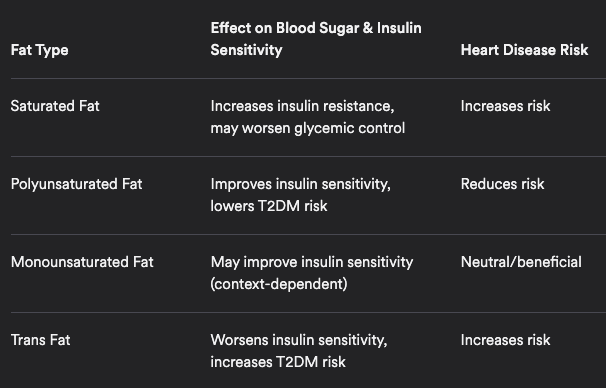
Table 1: Summary of dietary fat types and their metabolic and cardiovascular effects [1,4,12,13,16]
Key Takeaways
In summary, for those with T2DM and/or HD, focusing on the quality and source of dietary fat (favoring unsaturated fats and minimizing saturated and trans fats) as well as quantity of fat intake daily can support better blood sugar management, improve insulin sensitivity, and reduce disease risk.
Prioritize unsaturated fats (from plants, nuts, seeds, and fish) over saturated and trans fats.
Limit total fat intake if it leads to excess calorie consumption and weight gain.
Focus on overall dietary patterns—including whole grains, fruits, and vegetables—for optimal blood sugar and heart health.
References
1. Risérus, U., Willett, W., & Hu, F. Dietary fats and prevention of type 2 diabetes. Progress in Lipid Research. 2009; 48 1. https://doi.org/10.1016/j.plipres.2008.10.002.
2. Lytrivi, M., Da Silveira Cauduro, C., Kibanda, J., Kristanto, P., Paesmans, M., & Cnop, M. Impact of saturated vs. unsaturated dietary fat on insulin sensitivity, pancreatic β-cell function and glucose tolerance: a systematic review and meta-analysis of randomized, controlled trials. The American Journal of Clinical Nutrition. 2023 https://doi.org/10.1016/j.ajcnut.2023.07.018.
3. Bradley, B. Dietary Fat and Risk for Type 2 Diabetes: a Review of Recent Research. Current Nutrition Reports. 2018; 7. https://doi.org/10.1007/s13668-018-0244-z.
4. Comarella, A., & Belfort-DeAguiar, R. 263-LB: Food Intake Impacts on Insulin Secretion, Resistance, and Glucose Variability in Free-Living Individuals with Type 2 Diabetes Mellitus. Diabetes. 2023 https://doi.org/10.2337/db23-263-lb.
5. Comarella, A., & Belfort-DeAguiar, R. 263-LB: Food Intake Impacts on Insulin Secretion, Resistance, and Glucose Variability in Free-Living Individuals with Type 2 Diabetes Mellitus. Diabetes. 2023 https://doi.org/10.2337/db23-263-lb.
6. Sobczak, A., Blindauer, C., & Stewart, A. Changes in Plasma Free Fatty Acids Associated with Type-2 Diabetes. Nutrients. 2019; 11. https://doi.org/10.3390/nu11092022.
7. Morio, B., Fardet, A., Legrand, P., & Lecerf, J. Involvement of dietary saturated fats, from all sources or of dairy origin only, in insulin resistance and type 2 diabetes. Nutrition Reviews. 2016; 74 1. https://doi.org/10.1093/nutrit/nuv043.
8. Brown, T., Brainard, J., Song, F., Wang, X., Abdelhamid, A., & Hooper, L. Omega-3, omega-6, and total dietary polyunsaturated fat for prevention and treatment of type 2 diabetes mellitus: systematic review and meta-analysis of randomised controlled trials. The BMJ. 2019; 366. https://doi.org/10.1136/bmj.l4697.
9. Garonzi, C., Forsander, G., & Maffeis, C. Impact of Fat Intake on Blood Glucose Control and Cardiovascular Risk Factors in Children and Adolescents with Type 1 Diabetes. Nutrients. 2021; 13. https://doi.org/10.3390/nu13082625.
10. Schlesinger, S., Schwingshackl, L., & Neuenschwander, M. Dietary fat and risk of type 2 diabetes. Current Opinion in Lipidology. 2019; 30. https://doi.org/10.1097/mol.0000000000000567.
11. Ojo, O. Dietary Intake and Type 2 Diabetes. Nutrients. 2019; 11. https://doi.org/10.3390/nu11092177.
12. Ağagündüz, D., Icer, M., Yesildemir, O., Koçak, T., Kocyigit, E., & Capasso, R. The roles of dietary lipids and lipidomics in gut-brain axis in type 2 diabetes mellitus. Journal of Translational Medicine. 2023; 21. https://doi.org/10.1186/s12967-023-04088-5.
13. Neuenschwander, M., Barbaresko, J., Pischke, C., Iser, N., Beckhaus, J., Schwingshackl, L., & Schlesinger, S. Intake of dietary fats and fatty acids and the incidence of type 2 diabetes: A systematic review and dose-response meta-analysis of prospective observational studies. PLoS Medicine. 2020; 17. https://doi.org/10.1371/journal.pmed.1003347.
14. Van Zuuren, E., Fedorowicz, Z., Kuijpers, T., & Pijl, H. Effects of low-carbohydrate- compared with low-fat-diet interventions on metabolic control in people with type 2 diabetes: a systematic review including GRADE assessments. The American Journal of Clinical Nutrition. 2018; 108 2. https://doi.org/10.1093/ajcn/nqy096.
15. Pham, N., Joglekar, M., Wong, W., Nassif, N., Simpson, A., & Hardikar, A. Short-chain fatty acids and insulin sensitivity: a systematic review and meta-analysis. Nutrition Reviews. 2023; 82. https://doi.org/10.1093/nutrit/nuad042.
16. Jiao, J., Liu, G., Shin, H., Hu, F., Rimm, E., Rexrode, K., Manson, J., Zong, G., & Sun, Q. Dietary fats and mortality among patients with type 2 diabetes: analysis in two population based cohort studies. The BMJ. 2019; 366. https://doi.org/10.1136/bmj.l4009.
17. Ley, S., Hamdy, O., Mohan, V., & Hu, F. Prevention and management of type 2 diabetes: dietary components and nutritional strategies. The Lancet. 2014; 383. https://doi.org/10.1016/s0140-6736(14)60613-9.
18. Ye, H., Wu, Y., Pan, Z., Liu, X., Ao, Y., Li, Y., Yao, J., Liu, H., Yang, Z., Zhang, Y., & Jiao, J. Timing of Dietary Fatty Acids to Optimize Reduced Risk of Type 2 Diabetes Mellitus: Findings from China Health and Nutrition Survey. Nutrients. 2025; 17. https://doi.org/10.3390/nu17132089.
19. Gower, B., & Goss, A. A lower-carbohydrate, higher-fat diet reduces abdominal and intermuscular fat and increases insulin sensitivity in adults at risk of type 2 diabetes. The Journal of Nutrition. 2015; 145 1. https://doi.org/10.3945/jn.114.195065.
20. Veit, M., Van Asten, R., Olie, A., & Prinz, P. The role of dietary sugars, overweight, and obesity in type 2 diabetes mellitus: a narrative review. European Journal of Clinical Nutrition. 2022; 76. https://doi.org/10.1038/s41430-022-01114-5.